




ABOUT
Repairing The Building
| Property | Description |
|---|---|
| Service Type | Structural and Non-Structural Building Repair |
| Base Material | Polymer-modified mortar, epoxy resin, corrosion-resistant coating |
| Repair Methods | Crack injection, concrete patching, jacketing, re-plastering, grouting |
| Recommended Areas | Residential, commercial, and industrial buildings |
| Surface Preparation | Cleaning, removing loose material, and treating corroded steel |
| Application Method | Brush, trowel, or spray depending on repair type |
| Compressive Strength (Repair Mortar) | 30–50 MPa |
| Bond Strength | > 1.5 MPa with parent concrete |
| Curing Time | 24 hours to 7 days (depending on material) |
| Durability | High resistance to weathering and corrosion |
| Protection System | Waterproofing, anti-carbonation, and crack sealing |
| Expected Lifespan | 10–15 years with proper maintenance |
| Safety Standards | Complies with IS 13620 and IS 9103 guidelines |
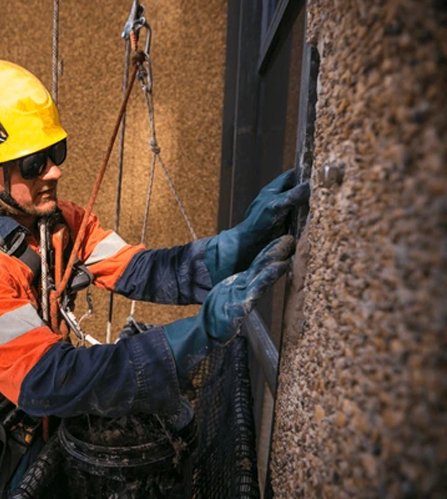
Repairing The Building involves restoring structural integrity, durability, and functionality to damaged or deteriorated structures caused by aging, water seepage, corrosion, or environmental factors. The process includes concrete repair, crack filling, re-plastering, waterproofing, and reinforcement treatments to extend the building’s lifespan. Using advanced materials such as polymer-modified mortars, epoxy resins, and corrosion inhibitors ensures long-term protection, improved aesthetics, and safety while minimizing future maintenance costs.